Quick answer: A pharmacy business loan in Bangladesh is typically processed through the retail trading or service-sector SME lending desks of scheduled banks and non-bank financial institutions (NBFIs) under Bangladesh Bank’s CMSME Master Circular (SMESPD Circular No. 01, 17 March 2025). Eligible retail medicine stores, model pharmacies, and pharmaceutical distributors can apply for revolving Cash Credit (CC Hypo) or Overdraft (OD) facilities to fund daily medicine stock, or SME term loans to renovate shelves, install temperature-controlled refrigerators, and set up point-of-sale (POS) billing. Standard commercial SME rates typically range from 12% to 14.5%, while women-owned pharmacies and eligible small enterprises under central bank refinance schemes can access lower rates (such as up to 5% under the dedicated women’s refinance window or 7% under broader CMSME refinance when active). Mandatory DGDA drug licensing, pharmacist compliance, a valid Trade License, and clean CIB records are essential before approval.
Updated 21 November 2026. Commercial bank interest rates, refinance fund pools, DGDA drug licensing rules, and bank credit policies change periodically. Confirm current interest rates, collateral thresholds, and licensing requirements directly with your bank branch and regulatory authorities before applying.
Anyone who has watched a neighborhood medicine shop in Bangladesh knows how fast inventory turns over—and how tightly cash gets tied up on the shelves. A well-run retail pharmacy near a hospital, diagnostic center, or busy residential bazaar sells essential medicines and healthcare items every single day. Yet pharmaceutical manufacturers and wholesale distributors increasingly expect faster settlement or tighter credit limits, while insulin, vaccines, and specialty drugs require proper cold-chain refrigeration and steady stock depth. When a pharmacy owner asks a bank for working capital or expansion funds, approval depends on showing steady cash movement, clean credit history, and full regulatory compliance under Bangladesh’s drug laws.
How Banks Underwrite a Pharmacy Business Loan in Bangladesh
In Bangladesh, banks classify retail medicine shops and pharmaceutical distributors under the CMSME framework governed by Bangladesh Bank’s CMSME Master Circular. Depending on whether your outlet focuses purely on retail medicine sales or combines dispensing with broader healthcare retail, credit officers evaluate your file using both trading turnover metrics and healthcare compliance checks. You can review general CMSME thresholds in our CMSME loan guide for Bangladesh.
Unlike informal cash businesses where profit is hard to trace, pharmacies have a clear advantage: medicine purchases and daily sales follow predictable supplier and customer patterns. However, bank credit committees also look closely at four specific risk factors in pharmaceutical retail:
- Regulatory and drug-safety compliance: Selling medicines without a valid drug license or required pharmacist oversight exposes the business to regulatory penalties, seizure, or closure—an unacceptable risk for any lender.
- Inventory shelf life and expiry management: Medicines have strict expiry dates. A bank wants to see that you order fast-moving generics and essential items in line with actual local demand rather than letting slow stock expire on shelves.
- Cash vs. bank deposit discipline: Many small pharmacies collect daily cash and pay wholesale suppliers directly in cash without routing deposits through a bank account. Without bank statement history, a credit officer cannot easily verify your true monthly turnover.
- Credit Information Bureau (CIB) cleanliness: Every owner, partner, or director must hold a clean CIB report from Bangladesh Bank with no overdue or classified loan accounts.
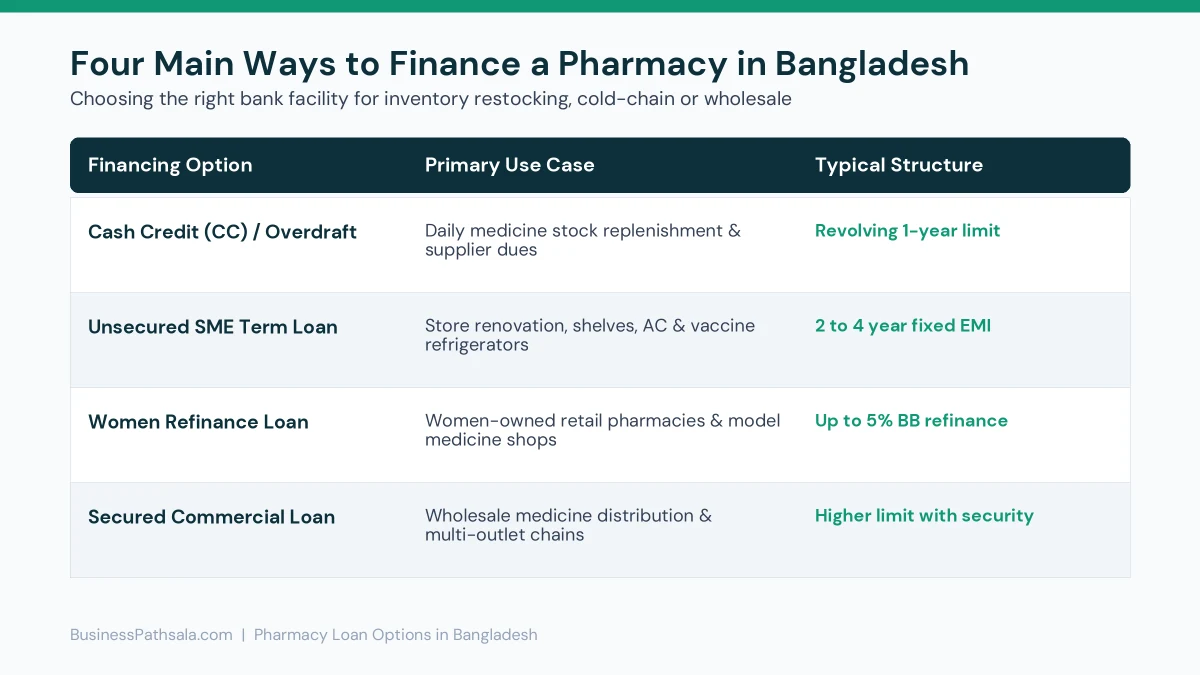
Four Main Ways to Finance a Pharmacy in Bangladesh
Choosing the right loan format prevents unnecessary interest costs. Buying daily medicine stock with a high-interest fixed term loan—or funding a multi-year shop upgrade with a short-term overdraft—can strain monthly cash flow. Below are the four main financing options used by Bangladeshi pharmacy owners.
1. Cash Credit (CC Hypothecation) or Overdraft (OD) for Medicine Stock
For day-to-day medicine restocking, a revolving Cash Credit (CC Hypo) or Overdraft (OD) limit is usually the most practical facility. The bank sets a sanctioned credit limit (typically reviewed and renewed annually), and you pay interest only on the amount you actually use each day. When you collect daily sales and deposit cash into the account, your available limit refreshes. This structure fits pharmacies that buy stock regularly from pharmaceutical distributors and need smooth liquidity across busy and quiet weeks.
2. Unsecured SME Term Loan for Shop Upgrade and Cold Chain
If you want to convert a basic medicine shop into a modern model pharmacy, expand shelf space, upgrade glass display cabinets, buy medical refrigerators for temperature-sensitive products, or install digital pharmacy billing software, an SME term loan spreads the cost over 2 to 4 years in equal monthly installments (EMIs). Leading private SME banks offer collateral-free term loans to established small businesses with proven bank turnover, backed by personal guarantors, hypothecation of shop stock/equipment, and security cheques.
3. Women Entrepreneur Refinance Window (Up to 5% Rate)
Women entrepreneurs who own 100% of a sole proprietorship—or hold at least 51% equity in a partnership or private limited company—can apply through a bank’s Women Entrepreneurs Dedicated Desk under Bangladesh Bank’s SMESPD Refinance Schemes. Under Bangladesh Bank’s dedicated Small Enterprise Refinance Scheme for women entrepreneurs, customer-level interest rates are capped at 5% per year when refinance funds are active, and central bank guidelines instruct lenders to consider collateral-free loans up to BDT 25 lakh against personal guarantees. You can also check our Uddokta loan guide for Bangladesh for broader entrepreneur financing options.
4. Secured Commercial Loans for Multi-Branch Chains and Distribution
Entrepreneurs operating multiple pharmacy outlets, larger pharmaceutical wholesale/distribution agencies, or regional medicine warehouses often need credit limits above unsecured SME caps. Pledging registered commercial or residential property (or an FDR/DPS lien) unlocks larger term loans or working-capital limits with multi-year repayment tenures.
Interest Rates and Real Repayment Math (BDT 10 Lakh Example)
Interest rates on pharmacy loans in Bangladesh depend on whether your application qualifies for a central bank refinance allocation or falls under standard commercial SME pricing. Outside subsidized refinance windows, commercial SME loan rates across banks generally sit around 12% to 14.5% depending on risk assessment and collateral. You can compare broader bank pricing in our guide to SME loan interest rates in Bangladesh.
To see how rate differences affect monthly cash outflow, look at an illustrative BDT 10,00,000 (10 lakh) term loan repaid over 36 months (3 years) on a standard monthly reducing-balance schedule:
| Rate Scenario (BDT 10 Lakh, 36 Months) | Approx. Monthly EMI | Total Interest (3 Years) | Total Repayment |
|---|---|---|---|
| 5.0% Annual Rate (Women Refinance Ceiling) | BDT 29,971 | BDT 78,952 | BDT 10,78,952 |
| 7.0% Annual Rate (CMSME Refinance Window) | BDT 30,877 | BDT 1,11,575 | BDT 11,11,575 |
| 12.0% Annual Rate (Lower Commercial SME Tier) | BDT 33,214 | BDT 1,95,715 | BDT 11,95,715 |
| 13.5% Annual Rate (Typical Commercial SME Rate) | BDT 33,935 | BDT 2,21,670 | BDT 12,21,670 |
Illustrative calculation only: Figures assume equal monthly installments (EMI) and exclude bank processing fees, CIB fees, stamp duties, and VAT. Actual repayment terms appear in your written sanction letter.
On a BDT 10 lakh loan over three years, a 5% refinance rate saves roughly BDT 3,964 per month and BDT 1,42,718 in total interest compared to a 13.5% commercial rate. Even a 7% CMSME refinance window saves over BDT 1.10 lakh in interest compared to 13.5%.
Banks and Institutions Financing Pharmacies in Bangladesh
Most banks in Bangladesh do not market a separate “Pharmacy Loan” label. Instead, they serve medicine stores and healthcare retailers through their standard SME Banking, Women Banking, and Branch SME desks. Before choosing a lender, compare how different institution types operate in practice.
| Lender Type | Examples of Active Institutions | What to Expect | Best Fit For |
|---|---|---|---|
| Private SME-Focused Banks | BRAC Bank, City Bank, Eastern Bank (EBL), Prime Bank, Mutual Trust Bank (MTB), Dhaka Bank | Structured SME evaluation, active refinance desks where eligible, and digital/POS banking tools | Established pharmacies (1–2+ years) with steady bank deposits and clean tax/license records |
| Shariah-Compliant Banks | Islami Bank Bangladesh, Shahjalal Islami Bank, Al-Arafah Islami Bank | Islamic working-capital and asset-backed modes (such as Bai-Muajjal or HPSM) | Owners seeking Shariah-compliant financing for stock or shop fixtures |
| State-Owned Commercial Banks | Sonali Bank, Janata Bank, Agrani Bank, Rupali Bank | Broad branch presence in district towns and upazilas; often lower rates on secured loans | Local pharmacies in smaller towns, especially when collateral or regional ties are strong |
| Licensed NBFIs | IDLC Finance, IPDC Finance, LankaBangla Finance | Focused commercial SME and equipment/lease support for qualifying businesses | Businesses needing structured equipment or SME financing with strong cash-flow proof |
For practical guidance on preparing your loan proposal before visiting a bank branch, read our guide on writing a business plan for a bank loan in Bangladesh.
Eligibility Criteria and DGDA Drug Licensing Rules
Running a pharmacy is a regulated healthcare activity in Bangladesh. Under the Drugs (Control) Act and national pharmacy regulations overseen by the Directorate General of Drug Administration (DGDA) and pharmacist registration rules linked to the Pharmacy Council of Bangladesh (PCB), a medicine shop must satisfy legal drug-dispensing and pharmacist requirements alongside standard banking eligibility.
- Valid DGDA Drug License and Pharmacist Compliance: A bank will look for an active Drug License issued under DGDA rules and proper pharmacist qualification/registration compliance (such as A, B, or C grade pharmacist requirements depending on pharmacy category and regulatory rules).
- Business Track Record: Most banks look for at least 1 to 2 years of active pharmacy operation with verifiable sales before approving unsecured SME loans. Brand-new pharmacies without prior business history or collateral face much stricter scrutiny.
- Age and Citizenship: Bangladeshi citizen with a valid National ID (NID), typically aged between 21 and 65 years at loan maturity.
- Clean CIB Status: Neither the applicant nor any partner, director, or personal guarantor may have an overdue or classified loan default in the Bangladesh Bank CIB database.
- Collateral and Guarantees: Unsecured SME facilities generally rely on personal guarantees from solvent guarantors, hypothecation of inventory/equipment, and security cheques, whereas larger facilities or weaker financial profiles may require tangible collateral or liquid security.
Required Documents Checklist for a Pharmacy Loan
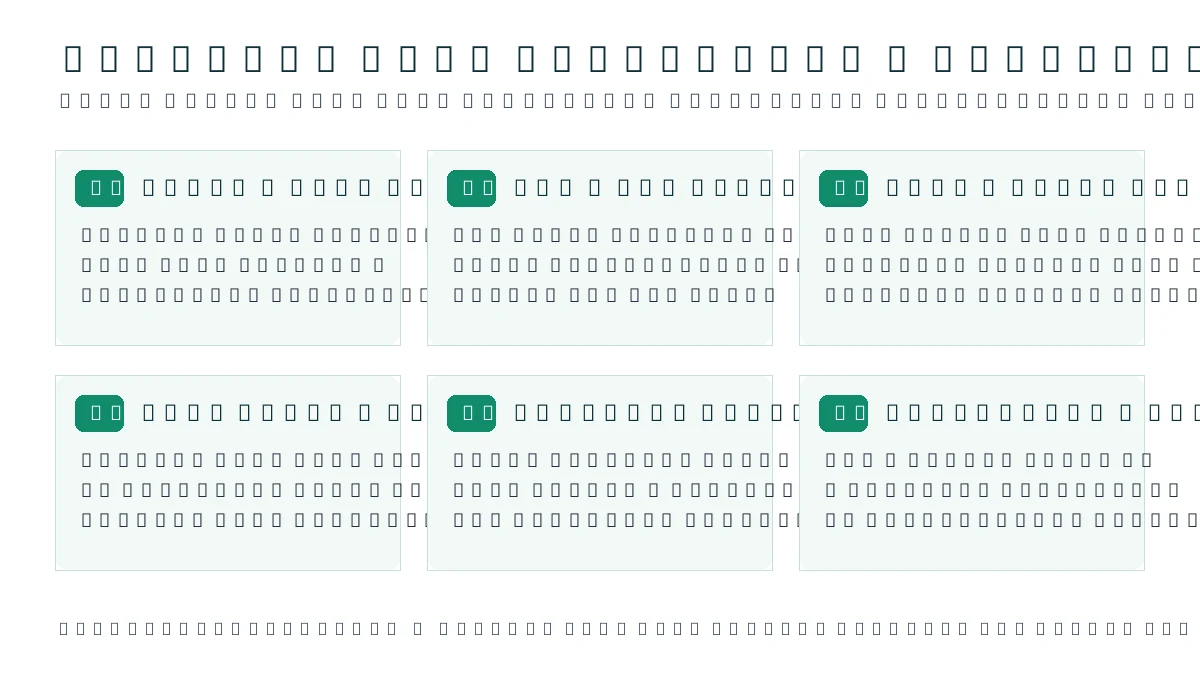
Missing a renewed drug license, expired trade license, or incomplete bank statement is one of the easiest ways to stall a loan application. Gather these six document categories before visiting a bank branch.
- Trade License and Drug License: Updated Trade License from the relevant City Corporation, Pourashava, or Union Parishad specifying medicine/pharmacy retail or wholesale, plus a valid DGDA Drug License and required pharmacist registration papers.
- Identity and Tax Documents: Valid NID copy and passport-size photographs of the owner/partners/directors, an active e-TIN certificate, and latest income tax return acknowledgement (PSR) where applicable (plus RJSC incorporation papers for private limited companies).
- Bank Statements and Sales Proof: Last 6 to 12 months of business bank statements, supported by supplier purchase invoices/statements and daily sales/billing records so the bank can verify real business volume.
- Shop Premises Proof: Copy of the commercial shop rent agreement (or property ownership/tax papers if owned) along with electricity/utility bills for the shop.
- Business Project Profile or Loan Proposal: A clear, practical summary of your current stock level, average daily sales, operating costs (rent, staff, electricity), exact use of the requested loan, and monthly repayment plan. You can follow our guide on preparing an SME loan project profile in Bangladesh to organize your numbers cleanly.
- Guarantor and Security Papers: NID copies, photos, and income or business proof for personal guarantors (or property/FDR documents if offering collateral).
Step-by-Step: How to Apply for a Pharmacy Business Loan
- Verify your licenses and renew anything expiring soon. Confirm that your Trade License and DGDA Drug License are valid and match your shop’s legal name and address.
- Route daily sales and supplier payments through a business bank account. Even if many customers pay cash, depositing regular cash collections into a business bank account—and paying distributors through banking or traceable channels where practical—builds a clear credit trail over 6 to 12 months.
- Speak directly with the branch SME or Women SME desk. Ask clearly which SME working-capital or term-loan products fit a pharmacy of your size, whether any refinance window applies, and what exact document list they require.
- Submit a complete application and collect an acknowledgement. Hand in your filled form and document folder at the branch and keep a dated receipt or tracking reference. Never pay unofficial middlemen promising guaranteed approval.
- Prepare your shop for physical verification and CIB check. A bank officer will typically visit your pharmacy to inspect inventory, refrigeration, shop location, and sales records while head office runs CIB screening.
- Check the written sanction letter before signing. Review the interest rate, EMI or revolving limit terms, processing fees, VAT, guarantor clauses, and early-settlement rules in writing before accepting the offer.
Common Mistakes Pharmacy Owners Make When Applying
- Keeping cash sales completely out of bank accounts: When a pharmacy runs on unrecorded cash, banks cannot verify true turnover and may reject the application or approve a much smaller amount than expected.
- Applying with expired licenses or missing pharmacist papers: Regulatory gaps raise immediate compliance red flags during credit review.
- Asking for a vague lump sum without a clear plan: Specifying how much goes toward fast-moving medicine stock versus cold-chain storage or shop fixtures shows disciplined financial management.
- Overstretching monthly EMIs against slow-month cash flow: Always test your proposed monthly installment against slower trading months, not just peak seasonal weeks.
Frequently Asked Questions
Can I get a bank loan to open a brand-new pharmacy in Bangladesh?
Getting an unsecured bank loan for a brand-new pharmacy with no operating history is difficult because most banks look for 1 to 2 years of active business track record. New owners often start with personal savings, family/partner capital, or collateral/FDR-backed facilities, then use bank SME credit once operating history and bank transactions are established.
What is the interest rate on a pharmacy business loan in Bangladesh?
Standard commercial SME loans for pharmacies typically carry rates around 12% to 14.5% depending on the bank and risk profile. Qualifying women-owned small businesses under Bangladesh Bank’s dedicated women refinance window can access rates capped up to 5% per year when refinance allocations are active, and broader CMSME refinance windows carry lower capped rates when eligible.
Is a DGDA drug license mandatory for a pharmacy business loan?
Yes. Operating a medicine pharmacy legally requires a valid DGDA drug license and compliance with pharmacist regulations, so banks treat valid licensing as a core compliance requirement before lending to a pharmacy.
Which loan type is better for a pharmacy: Cash Credit (CC) or Term Loan?
A revolving Cash Credit (CC) or Overdraft facility is generally better for ongoing medicine inventory and daily supplier bills because you only pay interest on the balance used and can replenish it as sales come in. A term loan is better suited for one-time capital expenses such as shop renovation, display shelves, or medical refrigerators.
Can a women entrepreneur get a lower-rate loan for a pharmacy?
Yes. Eligible women-owned businesses (100% female proprietorship or at least 51% female ownership in partnerships/companies) can apply through a bank’s Women Entrepreneurs Dedicated Desk to access women-focused refinance schemes and policy protections where available.
Official Sources and Further Reading
- Bangladesh Bank SMESPD Circular No. 01 — CMSME Financing Master Circular (17 March 2025): Official CMSME definitions, credit guidelines, and lending rules in Bangladesh.
- Bangladesh Bank SME & Special Programmes Department (SMESPD): Central bank refinance schemes and SME credit directives.
- Directorate General of Drug Administration (DGDA): Official drug licensing and pharmaceutical regulation portal in Bangladesh.
- Pharmacy Council of Bangladesh (PCB): Official pharmacist registration and regulatory information.
Final Takeaway
Securing a pharmacy business loan in Bangladesh comes down to pairing compliant drug and trade licensing with transparent bank transaction records and the right credit format. Use revolving working capital for ongoing medicine inventory and term loans for shop or cold-chain upgrades, verify active refinance or women-entrepreneur options with two or three banks, and confirm all terms in writing before signing.
Financial information notice: This article is for general educational purposes only and does not constitute a loan offer, financial advice, or a guarantee of loan approval. Bank interest rates, refinance schemes, collateral rules, and drug licensing regulations may change over time. Always verify current terms directly with Bangladesh Bank, relevant regulatory authorities, and your chosen bank or financial institution.