Last updated: · By Abrar Hossain
Personal finance in Bangladesh means deciding how to use your income, savings and investments so you can meet today’s expenses, handle emergencies, repay debt and prepare for future goals. A practical plan starts with four things: know your cash flow, spend within your means, keep an emergency reserve and choose financial products that match your time horizon and risk tolerance.
This guide explains how to build that plan in Bangladeshi Taka, compare common savings and investment choices, manage borrowing, protect your family and organise tax and retirement decisions. It links to detailed BusinessPathsala guides when you need product-specific information, so you can move from the overview to the topic that applies to you.
Table of Contents
- What personal finance means
- Know your financial position
- Build a monthly budget
- Create an emergency fund
- Choose the right place for savings
- Understand investment options in Bangladesh
- Match investments to goals and risk
- Manage loans, credit cards and debt
- Protect your family with insurance
- Organise tax and financial records
- Plan for retirement and long-term goals
- Adjust your plan as life changes
- Avoid common personal finance mistakes
- A practical 30-day action plan
- Frequently asked questions
What Does Personal Finance Mean?
Personal finance is the way an individual or household earns, spends, saves, borrows, invests and protects money. It covers everyday choices, such as paying utility bills, as well as long-term decisions, such as funding a child’s education or preparing for retirement.
A useful personal finance plan connects five areas:
- Cash flow: how much money comes in and goes out each month.
- Budgeting: how income is allocated before it is spent.
- Savings: money kept for emergencies and planned expenses.
- Investing: money committed to assets or products with a potential return and a level of risk.
- Protection: insurance, responsible borrowing and records that help limit financial shocks.
These areas affect one another. A household with a large investment portfolio can still be financially vulnerable if it has no cash for an urgent hospital bill. A household with no debt may still struggle if spending is consistently higher than income. The objective is to build a system that works together.
1. Know Your Financial Position Before Making a Plan
Start by measuring your current position. Do not begin by choosing an investment product. First, understand what you earn, what you owe, what you spend and what you already own.
Calculate monthly cash flow
Monthly cash flow is income received during a period minus expenses paid during that period. Include salary, business income, freelance payments, rent, interest, remittances and other regular sources. Use take-home income for a household budget because tax and other deductions have already been removed.
Separate expenses into fixed, variable and occasional costs. Rent, school fees and loan instalments are usually predictable. Food, transport and utility bills can change. Eid purchases, annual insurance premiums, medical costs, repairs and education admission fees may occur only once or a few times a year. Convert annual costs into a monthly amount so they do not surprise your budget.
Calculate net worth
Net worth is the value of your assets minus your liabilities.
Net worth = Total assets − Total liabilities
Assets may include bank balances, savings certificates, government securities, investments, property and vehicles. Liabilities may include home loans, personal loans, credit card balances and money owed to others. Use realistic current values rather than the original purchase price of assets that may have depreciated.
Record your cash flow monthly and calculate net worth every three or six months. A single figure does not tell the whole story, but the trend can show whether savings are growing, debt is shrinking or spending is moving faster than income.
2. Build a Monthly Budget That Fits Bangladesh
A budget is a plan for your money. It gives each part of your income a purpose before the month begins. It should reflect actual rent, transport, food, healthcare, education and family responsibilities rather than an ideal percentage that is impossible to maintain.
Try the 50/30/20 rule as a starting point
The 50/30/20 framework allocates 50% of take-home income to needs, 30% to wants and 20% to savings and debt reduction. It is a guide, not a rule you must follow. In a city where rent, school fees or medical costs take a large share of income, the needs category may be higher. Adjust the proportions to fit your circumstances.
| Budget category | Illustrative share | Common examples |
|---|---|---|
| Needs | 50% | Rent, groceries, electricity, water, transport, essential healthcare, school costs and minimum debt payments |
| Wants | 30% | Dining out, entertainment, non-essential shopping, subscriptions and leisure travel |
| Savings and extra debt repayment | 20% | Emergency fund, planned purchases, retirement savings and payments above loan minimums |
For example, a household with Tk 60,000 in monthly take-home income could use Tk 30,000 for needs, Tk 18,000 for wants and Tk 12,000 for savings and additional debt repayment. This is an illustration, not a recommended allocation for every household. A family with high rent or medical costs should use a different split.
Make a budget in five steps
- Write down all take-home income expected during the month.
- List fixed bills and minimum loan or card payments first.
- Estimate variable costs using the last two or three months of spending.
- Set a savings amount and allocate money to upcoming annual expenses.
- Review actual spending weekly and adjust the next month’s plan.
Use a notebook, spreadsheet or budgeting app. The tool matters less than recording transactions consistently. Keep cash, bank accounts and mobile financial service wallets in the same view, but protect account credentials and do not share PINs or one-time passwords.
For salaried employees, build the budget around take-home pay rather than assuming bonuses or overtime will arrive every month. Treat festival bonuses, commissions and irregular income as extra cash until they are received. Decide in advance how to divide them between upcoming bills, debt, savings and planned family expenses.
3. Create an Emergency Fund Before Taking More Investment Risk
An emergency fund is money set aside for unexpected and necessary expenses, such as job loss, urgent medical treatment, essential travel or a major household repair. It helps you avoid selling long-term investments at a bad time or borrowing at a high cost when something goes wrong.
A commonly used starting target is three to six months of essential living costs. A person with irregular income, dependants, limited job security or higher medical responsibilities may need a larger reserve. Someone with stable income and strong family support may build toward the lower end first. The right amount depends on how quickly you could replace income and what obligations you must continue paying.
How to build the fund
- Calculate essential monthly costs: housing, basic food, utilities, transport, healthcare and minimum debt payments.
- Multiply that total by your chosen number of months.
- Open or designate a separate account that is easy to access and suitable for holding cash reserves.
- Automate a manageable transfer after each salary or income payment.
- Use the reserve only for genuine emergencies, then rebuild it after withdrawals.
Do not place the entire emergency fund in a product that locks money for a long period or penalises early withdrawal. The goal is access and capital stability, not maximum return. Keep a small amount accessible for immediate needs and the remainder in an appropriate liquid account after checking fees, access rules and the institution’s terms.
4. Choose the Right Place for Savings
Savings products serve different purposes. A transaction account is useful for receiving income and paying bills. A savings account may provide convenient access and some return. A fixed deposit, recurring deposit plan or government savings instrument may suit money that can remain untouched for a defined period, subject to its rules.
| Option | Typical purpose | Questions to check |
|---|---|---|
| Current or transaction account | Salary, payments and day-to-day cash flow | Fees, minimum balance, transfer limits and service access |
| Savings account | Accessible savings and short-term reserves | Profit or interest calculation, withdrawal rules, fees and account conditions |
| FDR / fixed deposit | Money that can be set aside for a chosen term | Tenure, early encashment terms, tax deduction, renewal and maturity instructions |
| DPS / recurring deposit | Regular saving through fixed instalments | Instalment amount, missed-payment rules, maturity value and early closure conditions |
| National Savings Certificates (Sanchayapatra) | Eligible savers seeking a government-administered savings product | Eligibility, investment ceiling, purchase rules, tax treatment and encashment rules |
Compare the amount you will actually receive after tax, fees and any early withdrawal adjustment. Do not compare headline rates alone. Ask for the product terms in writing and read how the institution calculates returns and handles premature withdrawal.
For product-by-product information, see BusinessPathsala’s guides to FDR rates in Bangladesh, choosing a bank for DPS, and Sanchayapatra rules and tax-return requirements. For the current profit and tax calculation, use the Sanchaypatra profit-rate and source-tax calculator as a related guide, then verify current terms with the issuing authority.
5. Understand Investment Options in Bangladesh
Investing means putting money into an asset or financial product with the aim of earning income, preserving purchasing power or growing capital over time. Every investment has conditions and risks. Before investing, understand how returns are generated, when you can access the money, what fees or taxes apply and how much you could lose.
Government securities
Bangladesh government securities include Treasury Bills, Bangladesh Government Treasury Bonds and Bangladesh Government Investment Sukuk. Bangladesh Bank describes Treasury Bills as short-term instruments and Treasury Bonds as longer-term securities. Individuals can invest through participating banks or primary dealers under the relevant procedures. Tradability, maturity and cash-flow arrangements differ by instrument. Review the Bangladesh Bank government securities information before taking action.
Learn the practical steps in how to buy Bangladesh Treasury Bills and Bonds, compare Treasury Bond yields and maturities, and understand the differences in Sanchayapatra versus Treasury Bonds.
FDR, DPS and Sanchayapatra
These products are often considered by savers who prefer defined terms or regular contributions. Their access rules and tax treatment differ. A fixed deposit may be unsuitable for emergency money if early withdrawal reduces the return. A DPS can encourage regular saving, but missed instalments and early closure may have consequences. Sanchayapatra has specific eligibility, investment and tax rules that can change, so verify the latest requirements before purchase.
For a broader comparison, read where to invest money safely in Bangladesh. It compares common routes such as FDR, Sanchayapatra and government securities.
Mutual funds pool money from investors and invest according to a stated mandate. Shares represent ownership in a company. Their values can rise or fall, and returns are not guaranteed. Review the fund’s prospectus, investment strategy, fees, manager, risks, audited information and redemption process. For shares, research the company and understand market risk instead of buying because of a rumour or a short-term price move.
The Bangladesh Securities and Exchange Commission provides investor education resources on capital-market products and risk. BusinessPathsala also explains mutual funds versus FDRs and Treasury Bonds.
Sukuk and Shariah-compliant options
Investors who want Shariah-compliant products should examine the contract, underlying assets, profit distribution method, fees, liquidity and risk disclosures. A product’s label alone does not explain whether it fits an individual’s financial needs or interpretation of Shariah principles. Compare the structure and documents before investing. See the guides to Shariah-compliant investment options in Bangladesh and Sukuk investment in Bangladesh.
6. Match Investments to Goals, Time and Risk
The right product depends on when you need the money and how much loss or delay you can tolerate. A product that may suit retirement savings can be unsuitable for tuition fees due next year. Separate goals before comparing returns.
| Goal horizon | What matters most | Approach to consider |
|---|---|---|
| Immediate to 12 months | Access, capital stability and predictable cash flow | Accessible bank savings or an appropriate short-term cash reserve |
| 1 to 3 years | Known maturity date and limited exposure to price changes | Term deposits or other products whose maturity fits the goal |
| 3 to 7 years | Balance between growth, liquidity and risk | A diversified mix of suitable deposits and investments, after assessing risk |
| More than 7 years | Long-term growth, diversification and discipline | A goal-based portfolio that can include appropriate long-term investments and retirement savings |
These are planning horizons, not product recommendations. Actual suitability depends on the goal, liquidity needs, tax position, age, income stability and risk capacity.
Check the real return, not only the advertised return
A nominal return is the amount shown by the product before considering inflation, tax and fees. Your real purchasing-power gain is lower when living costs rise. As a simple approximation, subtract the inflation rate from the after-tax return. For more precise comparisons, use the real-return formula: (1 + after-tax return) ÷ (1 + inflation rate) − 1.
For example, a product that earns a positive nominal return may still reduce purchasing power if inflation is higher after tax and costs. Use current official inflation data and the product’s written terms rather than relying on an old rate quoted in a social-media post.
Use diversification to manage concentration risk
Diversification means spreading money across more than one asset, institution, maturity or investment type. It does not remove all risk or guarantee a profit. It can reduce the damage caused by relying on one company, one market or one financial product. Keep money needed soon separate from investments intended for long-term goals.
7. Manage Loans, Credit Cards and Debt Carefully
Borrowing can help fund a home, education or an important purchase, but repayments reduce future cash flow. Before taking a loan, compare the total cost, not just the advertised interest or profit rate. Include processing fees, insurance charges, late fees, early settlement conditions and any variable-rate risk.
Make a complete debt list
Record each lender, outstanding balance, effective rate or profit rate, monthly instalment, remaining term, security and due date. Include credit cards, personal loans, vehicle loans, housing finance, informal borrowing and instalment plans. This gives you a clear view of your total obligations.
Pay at least the required amount by the due date to avoid late charges and other consequences. Then direct extra payments toward the most expensive debt, while checking whether the lender charges early repayment fees. This is often called the debt-avalanche approach. Some people prefer clearing the smallest balance first for motivation, but compare the cost before choosing.
Use credit cards as a payment tool, not extra income
A credit limit is borrowed money. Try to pay the full statement balance by the due date when your card terms allow it. Paying only the minimum can leave a balance that attracts charges. Check annual fees, cash-advance charges, foreign currency conversion, late fees, supplementary-card costs and reward conditions. Avoid cash advances for routine spending.
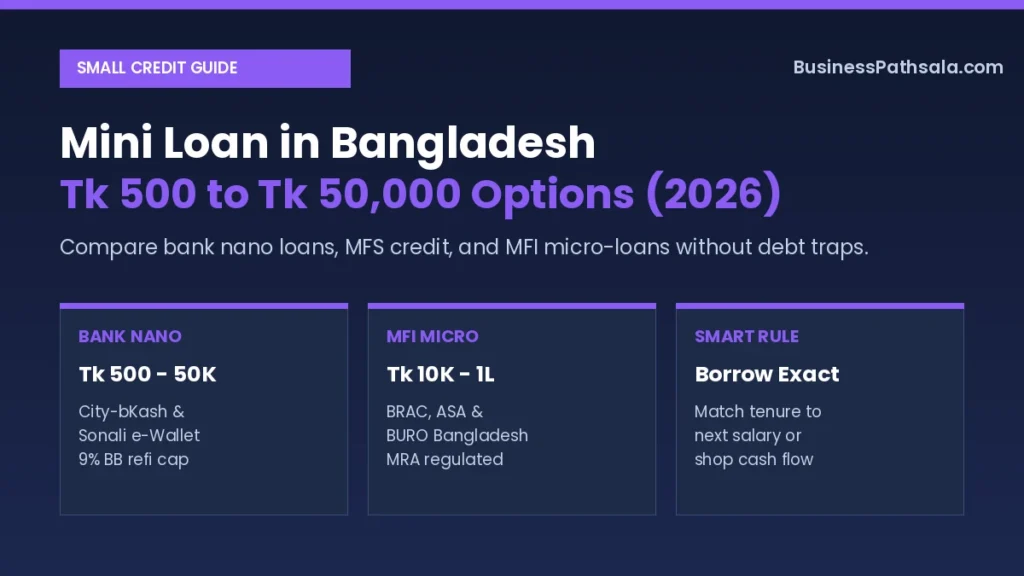
Compare available products in BusinessPathsala’s Bangladesh credit card comparison. If you are considering a personal loan for a planned purchase, assess the monthly instalment against your budget and compare the total repayment amount before applying.
Know when new borrowing is unsafe
Pause before borrowing if you already miss payments, use one loan to pay another, rely on credit for groceries or cannot explain how you will repay the amount. Do not share banking passwords, PINs or one-time passwords with a lender’s agent or caller. Verify any loan app or offer through the regulated institution’s official website or customer service channel.
8. Protect Your Family with Suitable Insurance
Insurance transfers defined financial risks to an insurer in exchange for a premium, subject to the policy’s limits, exclusions and conditions. The purpose is to protect against a loss that would be difficult to pay from ordinary savings. Insurance should fit actual household risks, not simply the most heavily promoted product.
Review whether your family needs health cover, life cover for people whose income supports dependants, or motor and property cover where relevant. Read the sum insured, waiting periods, exclusions, co-payments, deductibles, claim process, renewal terms and insurer contact details. Ask how pre-existing conditions and specific treatments are handled before buying a health policy.
Use these specialist guides for more detail: family health insurance in Bangladesh, car and bike insurance costs, and how to file an insurance claim. For regulatory information, consult the Insurance Development and Regulatory Authority (IDRA) and confirm that the insurer and product are authorised as required.
9. Organise Tax and Financial Records
Good records make it easier to prepare an income tax return, verify the source of funds, claim an eligible tax treatment and answer questions about an investment. Keep salary statements, bank statements, savings-certificate records, investment confirmations, dividend statements, rent documents, loan-interest statements and proof of eligible payments.
Do not assume that every savings or investment product qualifies for a tax rebate. Eligibility, ceilings, documentation and tax rates depend on the current law and the taxpayer’s circumstances. The National Board of Revenue (NBR) publishes the applicable Income Tax Acts and amendments, as well as an income tax FAQ and access to the e-Return system.
For investment-related tax planning, see tax rebate investment options in Bangladesh. For a practical filing walkthrough, use the site’s NBR online income tax return guide. If you need an e-TIN, see the separate e-TIN certificate guide. Always check the latest NBR rules for the relevant income year before relying on a threshold, rate or exemption.
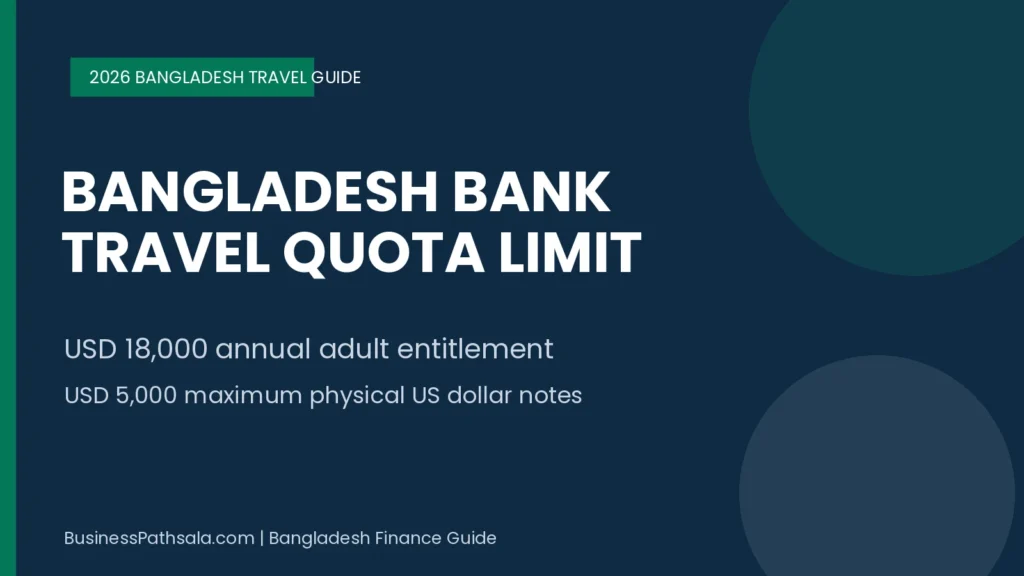
Keep a separate record for overseas travel and foreign-currency transactions. Bangladesh Bank’s rules and permitted limits can change, so check official instructions before exchanging currency or planning a trip. The Bangladesh Bank travel quota guide explains the relevant personal travel topic, but current limits should be verified against official notices and your bank.
10. Plan for Retirement and Long-Term Goals
Retirement planning is the process of estimating future living costs and arranging income or savings to meet them. Start early where possible, but begin with an affordable contribution rather than delaying because you cannot save a large amount. Review the plan when income, dependants, health or expected retirement age changes.
List long-term goals separately: retirement, children’s education, home purchase, family support and other major commitments. Estimate how much each goal may cost, when the money will be needed and how much you can contribute regularly. Avoid using money saved for one near-term goal to fund a speculative investment for another.
Bangladesh’s Universal Pension Scheme is one option to understand as part of long-term planning. Read the official National Pension Authority portal for current scheme details, eligibility, contribution procedures and rules. BusinessPathsala’s Universal Pension Scheme Bangladesh guide provides a related overview. Do not treat any one pension product as a complete retirement plan; consider other eligible savings, workplace benefits, assets and family obligations too.
11. Adjust Your Financial Plan as Life Changes
Your priorities change over time. A student may focus on avoiding unnecessary debt and building a first savings habit. A newly employed person may need an emergency fund and a plan for regular bills. A household with children may need education savings and health protection. Someone approaching retirement may focus more on predictable income, liquidity and estate arrangements.
| Life stage | Useful priorities |
|---|---|
| Student or first job | Track spending, build a small cash reserve, avoid expensive consumer debt and learn basic banking. |
| Early family or career | Build emergency savings, review insurance needs, manage housing costs and set clear goals. |
| Family with dependants | Protect income, plan education costs, keep adequate liquidity and reduce high-cost debt. |
| Mid-career | Review investment diversification, retirement contributions, outstanding loans and long-term goals. |
| Near retirement | Check expected income, healthcare costs, access to cash, debt obligations and the timing of asset withdrawals. |
People who receive income from overseas, freelance work or business activity should also plan around irregular payment dates and currency conversion. The amount received after transfer fees, exchange rates and applicable tax may differ from the quoted gross amount.
12. Common Personal Finance Mistakes to Avoid
- Investing before building liquidity: money needed for an emergency should not be locked into a long-term product.
- Chasing the highest advertised return: unusually high promised returns can signal risk or fraud. Ask how the return is generated and who regulates the provider.
- Ignoring tax and fees: compare net proceeds after applicable deductions and charges.
- Putting all savings in one place: consider institution, product, maturity and access risk rather than concentrating everything in one option.
- Taking loans without checking total cost: instalment size alone does not show the full cost of borrowing.
- Mixing emergency and investment money: separate accounts or clear records make it less likely that long-term goals are interrupted.
- Following rumours or social-media tips: verify rates, regulations, bank offers and investment claims through official sources.
- Failing to update beneficiaries and records: review nominees, contact details, policy documents and account information after major life events.
Never transfer money to an unverified person who guarantees a fixed or unusually high return. Check the company, licence, product documents and payment destination independently. If an investment cannot be explained in plain language, do not rush into it.
13. A Practical 30-Day Personal Finance Action Plan
You do not need to change every financial habit at once. Use the following 30-day plan to build a workable foundation.
- Days 1–3: Collect your records. Gather bank statements, mobile-wallet balances, salary details, bills, loan statements, insurance documents and investment records.
- Days 4–7: Calculate your position. Add monthly income, essential expenses, all debts, liquid savings and major assets. Calculate net cash flow and net worth.
- Days 8–10: Set priorities. Choose one emergency-fund target, one debt target and one medium- or long-term savings goal.
- Days 11–15: Create a budget. Set realistic category limits and reserve money for annual or irregular bills. Decide how much to transfer to savings after income arrives.
- Days 16–20: Review financial products. Compare account fees, deposit terms, investment risks and insurance coverage. Read official documents; do not make a purchase only because of a promotional rate.
- Days 21–25: Organise protection and tax records. Check insurance beneficiaries, policy details, loan due dates and relevant tax documents. Confirm current rules through official sources.
- Days 26–30: Automate and review. Set reminders or standing instructions where appropriate. Review spending, make any needed adjustments and schedule a monthly money review.
At the end of the month, keep the budget that you can actually follow. A realistic plan repeated over time is more useful than an aggressive plan abandoned after a few weeks.
Frequently Asked Questions About Personal Finance in Bangladesh
How should I start managing my money in Bangladesh?
Start by calculating your take-home income, listing monthly expenses and recording all debts. Build a realistic budget, set aside money for emergencies and choose one savings goal. Once you understand your cash flow, compare financial products that fit your time horizon and risk tolerance.
How much of my salary should I save every month?
There is no fixed amount that suits every household. The 50/30/20 rule suggests setting aside 20% of take-home income for savings and extra debt repayment, but high rent, family costs or irregular income may require a different split. Begin with an affordable amount and increase it when your budget allows.
Where should I keep my emergency fund?
Keep emergency money in an accessible, relatively stable place where you can withdraw it when needed. Review account fees, withdrawal limits and institution terms. Avoid placing the entire reserve in a long-term product with early encashment restrictions.
What is a good investment for beginners in Bangladesh?
The suitable option depends on the goal, investment period, liquidity needs and ability to tolerate losses. Beginners should understand accessible savings products, deposits, government securities and regulated investment products before committing money. Read the product documents and compare net returns, fees, tax and risk.
Is FDR better than Sanchayapatra or government bonds?
There is no single best choice for everyone. FDR terms are set by the bank, Sanchayapatra has specific government rules and eligibility conditions, and Treasury securities have different maturity and trading features. Compare liquidity, tax, risk, purchase rules and the date you need the money.
Should I repay a loan or invest my extra money?
Compare the effective cost of the loan with the realistic after-tax return and risk of the investment. Paying down expensive debt can provide a more certain saving than taking investment risk, but check early repayment charges and keep an adequate emergency reserve. Consider professional advice for complex situations.
How can I plan for retirement in Bangladesh?
Estimate future living and healthcare costs, identify any pension or workplace benefits and decide how much you can save regularly. Review the Universal Pension Scheme and other suitable long-term options through official sources. Revisit the plan as your income, family responsibilities and retirement date change.
Final Thoughts
Good personal finance is built through repeatable decisions. Understand your cash flow, prepare for emergencies, use debt carefully, protect your household and invest only after you understand the product. Review your plan regularly because prices, family needs, tax rules and financial products change.
Use this guide as the starting point, then follow the linked BusinessPathsala resources for detailed comparisons and procedures. Before making a financial decision, confirm current rates and rules with the bank, regulator, insurer or government authority responsible for the product.
Disclaimer: This article provides general educational information, not individual investment, tax, legal or insurance advice. Financial products carry different risks and terms. Verify current information with the relevant institution or qualified professional before acting.